Cartographer of the brain

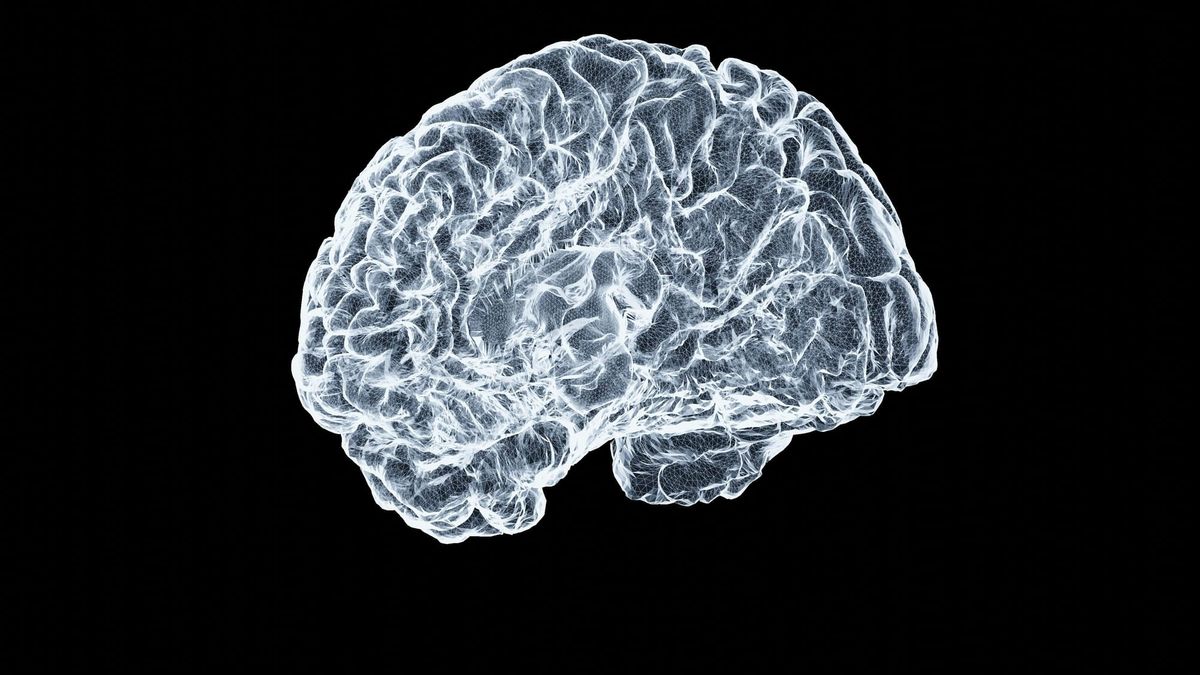
The most famous scientist you’ve never heard of.
- Outlet: Australian Geographic
- Length: 1979 words
- Turnaround time: Eight weeks
- Number of interviews: Four, all with the same person over a three-year period.
“Never has a bodily organ been so adored as the brain – not since Narcissus looked at his face reflected in water and fell in love with it. And never was there so little justification for it.”
This is a profile of Australian neuroscientist Professor George Paxinos, written for Australian Geographic. It was a story three years in the making, which shows the value of holding on to story ideas until the time is right.
Why this story?
In early 2018, I was invited on a behind-the-scenes tour for journalists at the Neuroscience Research Australia – NeuRA – facility in Sydney. One of the stops on that tour (as well as the Sydney Brain Bank) was at the laboratory of the charismatic neuroscientist Professor George Paxinos.
I had never heard of Paxinos, but it quickly became clear that he was a big deal in the science world for his ground-breaking – and I don’t use that term lightly – work mapping the brain. Over the course of a long career, he had published some of the most highly cited scientific books on record, and his brain maps were the definitive guides used by scientists around the world.
Oddly enough, he was also an aspiring fiction writer, and had been working on a novel for decades. I recall that struck me as a particularly quirky side-hobby for a male scientist of his vintage who had already made such a huge mark on the world.
He also came across as a genuinely lovely and passionate individual, and was clearly held in very high regard by those he worked with.
It had all the hallmarks of a wonderful profile opportunity.
Why now?
The good thing about profile pieces is they don’t have to have as strong a news hook as a typical news or feature story; I didn’t necessarily need a reason to pitch a profile of George Paxinos, other than he was simply a fascinating scientist who had made a major contribution to his field over a long career.
I did pitch the idea to New Scientist at the time, but it didn’t get over the line. The editor said while it was clear Paxinos’ work was enormously important, they couldn’t see an angle that would grab their readers’ interest.
Sometimes rejection is such a mood-killer that you get in a huff and drop the story and walk away, which I did. I probably should have tried other outlets, but …bygones.
Fast-forward to November 2021. Some random thought-particle wandering through the Universe must have struck just the right neuron in my brain, because it prompted me to Google the good prof and see what he was up to.
And that’s how I discovered that his novel had just been published. It gave me the nudge to pitch the story again, in much the same form as the original pitch, but this time to Australian Geographic magazine. Editor Karen McGhee agreed that Paxinos sounded like a fascinating character – who also came with the possibility of some incredible images for the article – and commissioned a 2000-word profile.
Just as I started organising to interview Paxinos, I found out that a major metropolitan newspaper was also working on a profile of him at around the same time. Fortunately, Karen decided that our audiences were far enough apart that it wouldn’t matter, so we went ahead.
Interviews
I had already interviewed Paxinos twice in my previous efforts to get a profile happening, but now that I had a commission, I wanted to really get into the weeds about his life, his work and who he is.
We arranged another telephone interview, which allowed me to get the facts and figures about his career, and also delve into his work, his passions, his goals. That could have been enough to write a solid profile, but to make this piece sing, I wanted to see him in his natural environment – the lab.
I ended up spending a couple of hours with Paxinos and two of his work colleagues in their lab at NeuRA, and it was well worth the effort – including the four hours of travel. There’s nothing like actually being in someone’s workspace, especially a space that they have occupied for decades, to get a sense of their spirit.
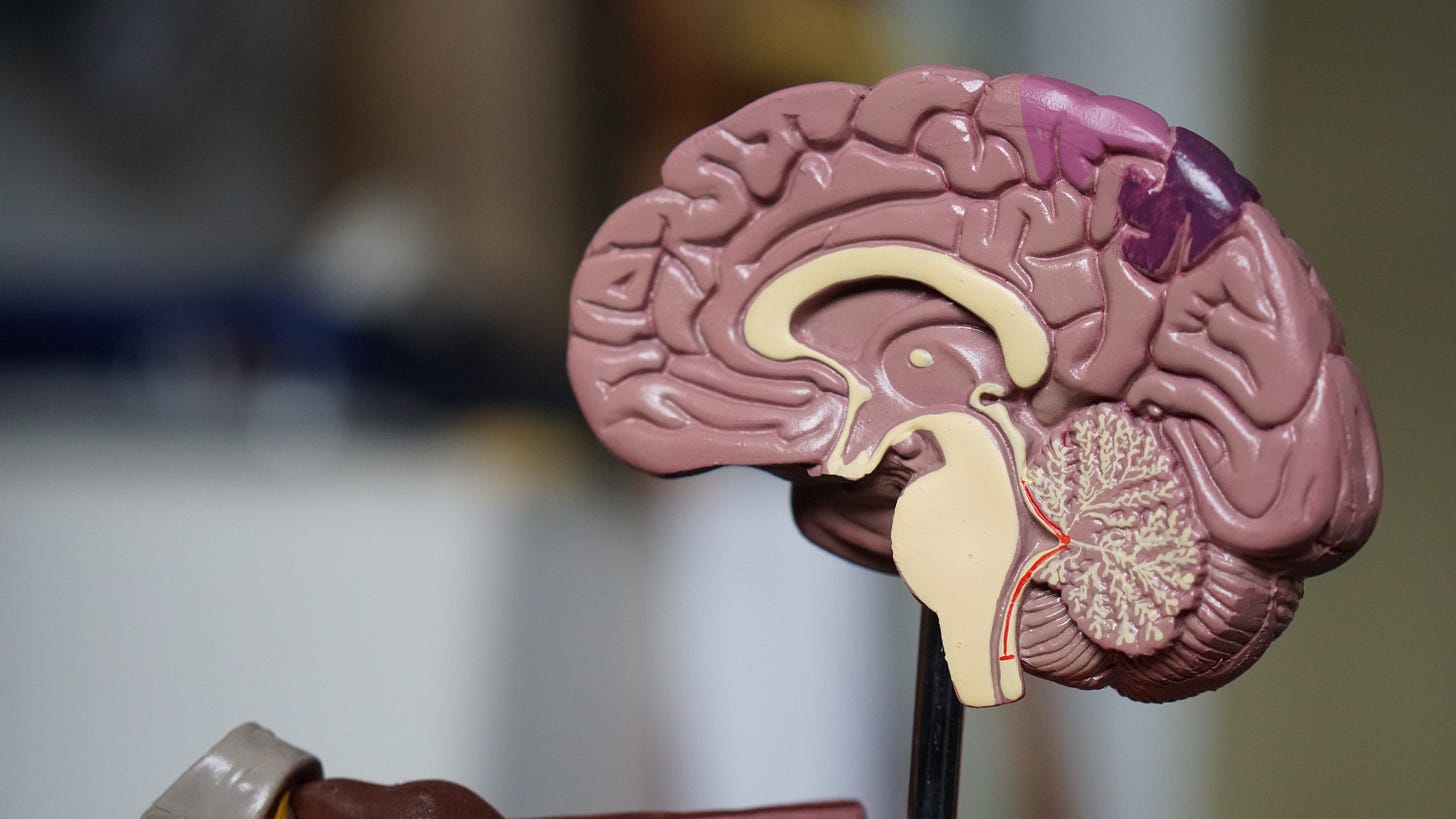
Paxinos’ lab was a treasure-trove of imagery, from the ancient-looking wood and plastic slide boxes on shelves labelled ‘rat’, ‘human’ and ‘monkey’ to the very high-tech multi-coloured brain images scattered in a seemingly random fashion across a benchtop. Paxinos himself was also so engaging and clearly profoundly immersed and invested in his work.
That time was so important to the story, because I was also able to see Paxinos interacting with his younger colleagues, and get a sense of the high esteem in which he is held.
Hearing them all talk about their work gave me some lovely set pieces for the story, like the way they lay out the images of the brain ‘slices’ across the table, down on to the floor and out into the corridor, to see how different regions of the brain are mapped throughout the organ.
Research
The research for this piece was really to fill out some of the scientific concepts that Paxinos mentioned, such as the biochemical stains that he used to highlight different regions. There was also a lot of fact-checking and filling in of dates, places, awards and publications.
Structure and writing
While Paxinos’ contributions to science were a key part of the story, I also wanted to bring out the other facets of his life, especially his environmentalism and his novel. Naturally, I read the novel – it was pretty good – and it shed some interesting light on Paxinos that was important for the story.
What did I learn from doing this?
This experienced reminded me never to let go of a good story idea. I have an ever-growing list of ideas that I’m always adding to, and occasionally I look up those ideas to see if anything has happened. It’s a lesson to do that more regularly, because otherwise you might miss those windows of opportunity.
It also showed the value of interviewing people for profiles in their natural environment, whether that be the lab, out in the field, at home or in their office.
And it made me realise I love doing profiles, because it gives me a reason to talk to these fascinating and often extraordinary humans for hours on end.